

The Future of Artificial Intelligence in Digital Marketing 2026
التسويق الإلكتروني أصبح عامل أساسي في إستراتيجية أي مؤسسة
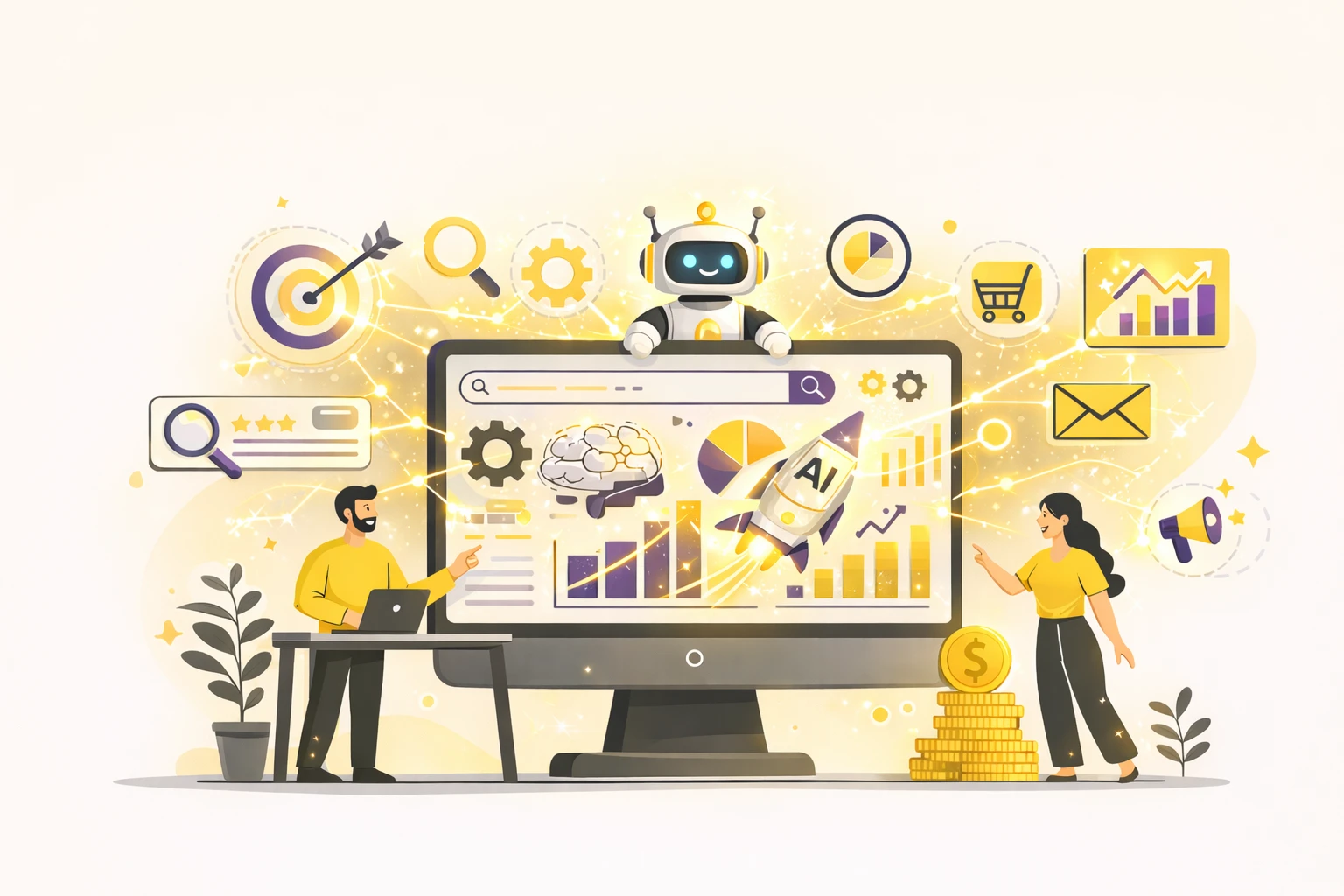

A practical guide on how to use artificial intelligence in digital marketing to create smart, intent-based campaigns that boost sales and drive sustainable growth in 2026.
Digital marketing in 2026 is undergoing a radical transformation driven by artificial intelligence technologies that are no longer just supportive tools, but have become a core part of planning, execution, and analysis. Campaign success no longer depends solely on creativity or large advertising budgets, but on the ability to accurately understand user intent and deliver personalized content at the right moment, on the right channel, and with the right message. In this article, we explore the future of artificial intelligence in digital marketing and how you can design smart campaigns that increase sales and achieve a higher return on investment, with a focus on high-intent long-tail keywords that are fully compatible with SEO.
What Is the Role of Artificial Intelligence in Modern Digital Marketing?
Artificial intelligence has become the main driving force behind many modern marketing systems, from analyzing big data to predicting customer behavior, generating content, and optimizing ads in real time. Leading companies today rely on machine learning algorithms to understand audience behavior patterns and anticipate their needs before they are explicitly expressed. Through AI, marketers can move from broad, generic campaigns to highly personalized campaigns for each individual user, significantly enhancing the customer experience and increasing conversion rates.
How Is Artificial Intelligence Changing Customer Targeting in 2026?
In 2026, targeting no longer relies only on age, location, and interests, but is instead based on search intent and actual user behavior across different channels. Advanced AI tools analyze search queries, browsing history, content engagement, and even digital activity timing to deliver highly accurate, personalized offers. Smart intent-based targeting uses long-tail keywords such as “best digital marketing company using AI to increase sales” and “how to launch a smart AI-powered advertising campaign in Saudi Arabia,” which reflect strong purchase intent or an imminent decision, making them extremely valuable for improving conversion rates. Predictive data analysis helps AI identify customers who are most likely to buy and determine the ideal time to display an ad or send a marketing message, reducing wasted advertising spend.
Smart Content Creation and Search Engine Optimization Using AI
AI is no longer limited to writing text; it can now analyze competitors, identify content gaps, and suggest long-tail keywords and headlines that align with user intent. In 2026, search engines increasingly reward content that directly answers user questions and delivers real value. As a result, AI can help propose high-intent, SEO-friendly headlines, optimize article structure using H1, H2, and H3 tags to improve readability, and analyze keyword density without compromising content quality. Examples of high-intent long-tail keywords include “how to use artificial intelligence to optimize ad campaigns and increase sales,” “best AI tools for digital marketing for small and medium-sized businesses,” and “AI-driven digital marketing strategies for fast growth in 2026.”
Smart Paid Advertising and Ad Budget Optimization
Advertising platforms such as Google and Meta increasingly rely on artificial intelligence to manage campaigns. In 2026, smart systems can automatically adjust bids and pricing, select target audiences, and change ad messages based on real-time performance. To increase sales through AI-powered advertising, high-intent keywords are analyzed in real time, multiple ad copies are tested automatically to select the best-performing versions, and potential customers are retargeted with personalized messages based on their previous behavior.
Personalized Customer Experience Across Digital Channels
One of the most powerful advantages of AI in digital marketing is its ability to unify the customer experience across websites, email, social media, and paid advertising. Through smart marketing automation, systems can send personalized emails, push notifications, or special offers at the exact moment a customer shows interest in a product or service, building trust and bringing the customer closer to a purchase decision.
Challenges of Using Artificial Intelligence in Marketing Campaigns
Despite its significant advantages, the use of artificial intelligence also comes with challenges, including data protection and compliance with local and international regulations, over-reliance on automation without human oversight, and the need for high-quality data to ensure accurate results. Striking a balance between human creativity and intelligent analysis is the key to success in 2026.
A Practical Strategy for Building a Smart Marketing Campaign That Sells More
The strategy begins by analyzing the market and audience using AI tools to collect data from search engines, social media, and user behavior on your website. This is followed by designing personalized, conversion-focused content through articles and landing pages that directly answer potential customers’ questions, supported by clear calls to action such as booking a consultation or requesting a quote. Finally, continuous testing and optimization rely on real-time performance analysis to refine messages and ads and invest more in the channels that deliver the highest return.
Conclusion: Why Artificial Intelligence Is the Future of Digital Sales
In 2026, artificial intelligence is no longer an optional add-on in digital marketing—it is a competitive necessity. Companies that invest in smart, intent-driven campaigns built around high-value long-tail keywords will be best positioned to attract customers and convert them into real sales. The future belongs to those who understand data, invest in personalization, and combine the power of technology with human creativity to build a comprehensive marketing experience that delivers sustainable growth.

