

The End of Traditional SEO: How to Prepare for AI-Powered Answer Engines in Search
التسويق الإلكتروني أصبح عامل أساسي في إستراتيجية أي مؤسسة
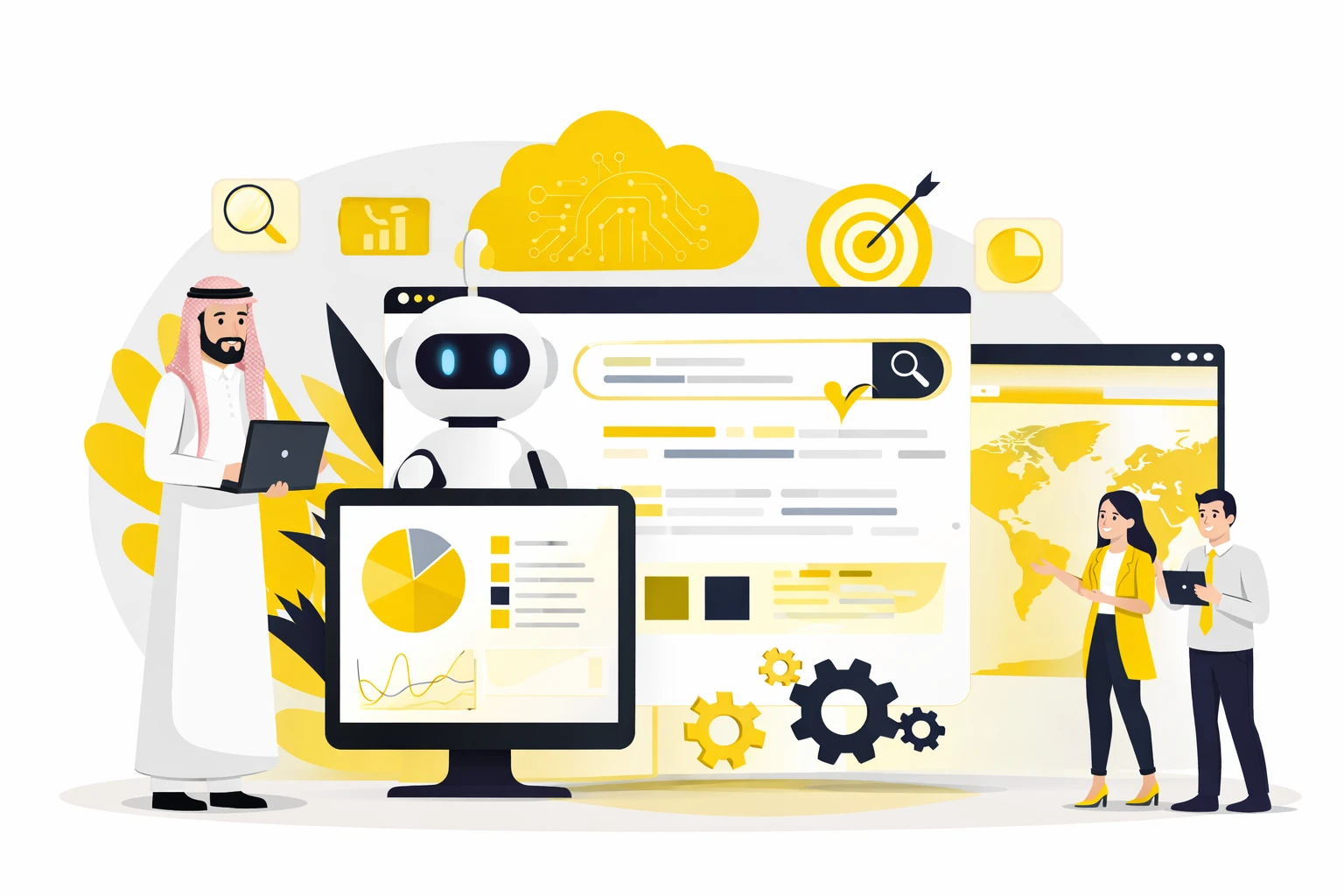

Learn how to move beyond traditional SEO and prepare for AI-powered search results by creating intent-driven content that increases visibility, trust, and business growth.
Appearing on the first page of Google is no longer the ultimate goal as it once was. Today, the real challenge is for your content to become part of the answer delivered directly by artificial intelligence. With the rapid expansion of generative search results and AI Overviews, the rules of search engine optimization have fundamentally changed. It is now essential to understand how to appear in AI-driven search results rather than relying solely on traditional SEO tactics focused on keywords and backlinks.
This shift reflects a deeper transformation in user behavior. Instead of typing short phrases, users now ask complete, intent-rich questions such as how to optimize a website for AI answer engines or what the best SEO strategy is in the age of artificial intelligence in 2026. As a result, search engines increasingly depend on semantic understanding and answer quality rather than simple keyword repetition.
The Transformation of Search Behavior in the AI Era
Modern users search in a conversational way, pushing search engines to develop systems capable of analyzing intent and delivering direct answers without requiring navigation across multiple websites. Success is no longer tied only to rankings but to whether your content is trusted as a primary source for AI-generated responses.
Businesses seeking stronger digital visibility must therefore produce content that genuinely answers customer questions—especially in competitive sectors like digital marketing and professional services, where search queries often signal clear buying intent rather than casual curiosity.
Why Traditional SEO Is No Longer Enough in 2026
In the past, SEO relied on measurable technical elements such as keyword density, backlink volume, and optimized titles and meta descriptions. Today, algorithms evaluate deeper signals including answer quality, source credibility, on-page user experience, and the usability of content within AI systems.
This marks the true difference between traditional SEO and AI-driven SEO. The former focused on satisfying algorithms, while the latter prioritizes satisfying users first and structuring knowledge in a way algorithms can confidently interpret and cite. As searches related to improving visibility in AI results continue to grow, ignoring this transformation has become a real risk for any business dependent on digital acquisition channels.
How to Create Content That Appears in AI Search Results
Direct Answers and Semantic Structure
Content that provides a clear takeaway from the beginning—supported by structured headings and concise paragraphs—has a significantly higher chance of appearing in intelligent search results. Search engines now favor pages that make information easy to extract and understand.
Strengthening Credibility Through E-E-A-T
AI results rely heavily on expertise, experience, authority, and trust. Supporting content with real data, case studies, or professional insights greatly increases the likelihood of being treated as a reliable source in generative answers.
Focusing on User Intent Rather Than Keyword Frequency
The real question is no longer how often a keyword appears, but whether the content delivers the exact solution the user is seeking. The more precise and useful the answer, the higher the chances of visibility across organic results, featured snippets, and AI summaries.
Delivering Real-World Expertise
Experience-driven content consistently outperforms generic rewritten material, making investment in specialized knowledge a core pillar of modern SEO strategy.
Practical Strategies to Improve Visibility in Answer Engines
Building Deep, Authoritative Content
Comprehensive resources that cover a topic from multiple angles are more likely to be cited as answer sources while guiding users from awareness to decision.
Using Structured Data for Machine Understanding
Structured data helps search engines classify page type, detect questions and answers, and understand topical relationships—significantly improving eligibility for AI-enhanced search features.
Integrating AI Into Marketing Strategy
Leading companies use AI not just for writing but for intent analysis, behavioral prediction, personalization, and conversion optimization—creating a true competitive advantage.
Enhancing User Experience and Site Speed
Load speed, readability, and visual clarity are no longer cosmetic factors; they are direct trust and ranking signals influencing modern search visibility.
The Future of Search Visibility
Current trends indicate a steady decline in clicks on traditional listings alongside increased reliance on direct AI answers. Real value is shifting from page ranking to knowledge authority—where brands recognized as trusted sources gain long-term influence over customer decisions.
Companies investing in intelligent content and superior user experience will outperform those still relying on outdated SEO tactics, even if the latter possess large content archives.
Conclusion: From Ranking Keywords to Leading Answers
The era of SEO driven by technical tricks and keyword repetition is over. A new era has begun—defined by deep knowledge, user experience, and artificial intelligence. Success now depends on understanding intent, producing trustworthy content, and building an integrated strategy that connects search visibility with real revenue growth.
Start Appearing in AI Search Results with Kayan
If you aim to build a powerful digital presence that ranks within AI-driven search, attracts high-intent customers, and transforms content into a sustainable growth engine, the most important step is partnering with experts who understand the future of digital marketing.
Contact Kayan today for a specialized consultation in AI-powered SEO and begin your journey toward stronger visibility and measurable results in the era of intelligent search.

